Contact Us
WhatsApp Us +65 8699 8821
Fiduciary Duties Explained: A Compliance Guide for Fund Directors

About this Episode

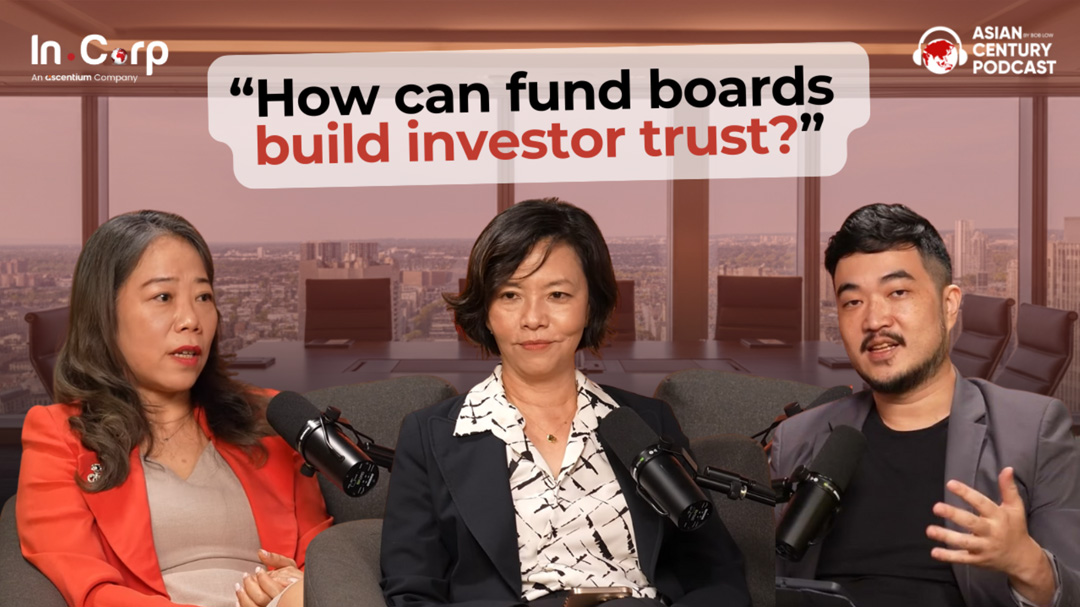
Good governance starts with informed and responsible directors who are fully committed to upholding their legal and ethical obligations. As the regulatory landscape continues to evolve globally, a deep and comprehensive understanding of fiduciary duties is more critical than ever for the effective operation of any fund or organisation. In this exclusive episode for fund directors and governance professionals, Bob Low and co-host Yie Ying (Wynne) Tan, our very own Head of Family Office and Fund Services at InCorp Singapore, offer a practical guide to strengthening oversight, transparency, and accountability at the board level. Our expert guest speaker, Yonn Yong of Harneys Fiduciary, breaks down the key fiduciary responsibilities, highlights the warning signs of weak governance, and shares actionable strategies to strengthen oversight, transparency, and accountability at the board level. Stay tuned until the end to gain clarity and confidence in fulfilling your fiduciary role!

Guest Speakers: Yonn Yong, Director, Harneys Fiduciary

Listen here on the go:

Key Takeaways

1. Fiduciary duties require active oversight, not passive compliance
Fund directors must demonstrate real engagement in governance, not just maintain well-written policies. Regulators expect boards to follow through on what they document, continuously monitor fund operations, and identify early warning signs rather than react after damage is done.

2. Strong governance frameworks are essential to prevent catastrophic failures
Cases like Eagle Hospitality Trust highlight the consequences of weak internal controls. Boards must establish robust checks and balances, independent audit functions, and regular performance monitoring to ensure adherence to policies and protect investor interests.

3. Conflicts of interest are one of the most serious fiduciary breaches
Undisclosed self-dealing, as seen in the Sun Weiyeh case, destroys objectivity and violates the core duty to act in investors’ best interests. Fund directors must implement strict conflict declaration procedures, incorporate independent reviews, and ensure transparent decision-making.

4. Personal accountability for directors is increasing across the industry
Regulators have made it clear that protection for directors ends where fraud, gross negligence, or willful misconduct begins. Individuals may be personally liable for losses arising from dishonest or reckless actions, reinforcing the need for diligence and integrity.

5. Independent verification and specialist oversight are key to preventing hidden misconduct
Complex trades or valuation practices require third-party fund administrators, independent directors, and specialist service providers. Their involvement reduces the likelihood that undisclosed transactions or internal manipulation will go unnoticed.

6. Transparency and accurate reporting are non-negotiable
Misleading regulators or investors, as shown in the Three Arrows Capital case, results in severe penalties. Directors must ensure that investment activities align with the fund documents and that any changes are promptly communicated and approved.

7. New asset classes bring new risks, requiring stronger AML and valuation practices
Crypto, stablecoins, and other emerging assets demand enhanced valuation methods, sector knowledge, and cybersecurity awareness. Boards must upgrade competencies and partner with specialised administrators to manage these risks responsibly.

8. Common patterns behind fiduciary failures include complacency and poor service provider management
Boards often falter when they stop reviewing documents rigorously, rely on outdated processes, or repeatedly engage the same advisers without assessing their suitability. Complacency weakens oversight and allows systemic risks to accumulate.

9. Compliance has become the most significant challenge for modern fund directors
With more complex cross-border products and rapidly evolving regulatory expectations, directors must remain vigilant and continuously update their compliance frameworks to keep pace with market developments.

10. Building a culture of integrity requires more than ticking boxes
True compliance culture comes from ongoing dialogue, rigorous feedback loops, and close collaboration between the board and management. Informal discussions, active issue escalation, and shared responsibility are key to early risk detection.

11. Investor trust begins with clear, consistent communication
Regular reporting, open Q&A dialogue, transparent explanations of investment strategies, and proactive disclosure of material matters are foundational to building long-term confidence among investors and stakeholders.

12. The most important principle for new fund directors: stay vigilant and never become complacent
A high-performing board continuously reviews, questions, and verifies. Directors must remain curious, proactive, and engaged, especially as markets evolve and investment strategies grow more complex.


FAQs

  • What is the most common root cause behind fiduciary breaches in investment funds?

  • Fiduciary failures often stem from complacency at the board level. When directors stop rigorously reviewing documents, rely on outdated processes, or repeatedly work with the same advisers without reassessment, oversight weakens, and risks go undetected until it’s too late.
  • How can fund directors better detect hidden conflicts of interest or self-dealing?

  • The most effective safeguards are independent oversight mechanisms. These include independent directors, third-party fund administrators who verify trades, and mandatory conflict declarations. Regular cross-checks dramatically reduce the chance of undisclosed self-benefiting transactions.
  • What should fund directors prioritise when overseeing emerging asset classes like crypto?

  • Directors should strengthen their understanding of valuation methodologies, engage specialised administrators familiar with crypto and stablecoins, and enhance cybersecurity and AML controls. These steps ensure governance standards match the higher risk and complexity of new asset categories.

More on New Podcast Series

Have a question about our fund management services?

Talk to our experts here